
Why do dogs roll in the grass? The surprising reasons behind this behaviour
Why do dogs love rolling in grass? Discover the instincts, scents and health clues behind this common behaviour.
Read more19 August 2026
Jump to any chapter:
Week 1: First-time pet parent guide
Week 2: Puppy vaccinations
Week 3: Preparing for training (you are here)
Week 4: Puppy sleep troubles
Week 5: Nutrition and growth
Week 6: Behavioural challenges
Week 7: Socialisation checklist
Here’s something that surprises a lot of new puppy owners: training doesn’t start when your puppy is ‘old enough’. Training starts from the moment they arrive home.
Every interaction you have with your puppy is teaching them something, whether you intend it to or not. The way you respond when they jump up, whine, chew something they shouldn’t, or go to the toilet in the wrong place is all shaping their behaviour.
The good news is that puppies are incredibly receptive learners in those early weeks. This guide will walk you through the foundations of puppy training, what to focus on first, how to make it work, and how to set both of you up for success.
On this page:
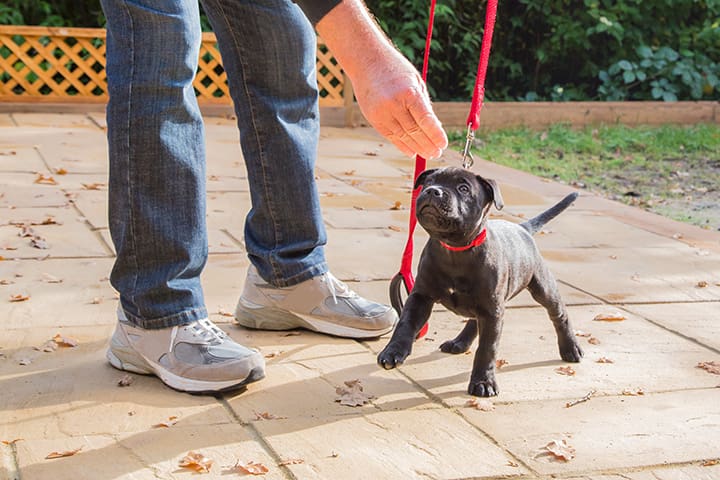
Before we get into the specifics, one principle underlies everything in this guide: reward the behaviour you want to see more of.
Positive reinforcement, using treats, praise, and play to reward good behaviour, is the most effective and kindest way to train a puppy. It builds trust, makes training enjoyable, and creates a dog who genuinely wants to do the right thing.
Punishment, shouting, or physical correction might seem to work in the moment, but they damage the bond between you and your dog and can cause anxiety and fear-based behaviour down the track. Keep it positive.
Sounds obvious, but this is step one. Say your puppy’s name in a happy, upbeat tone. When they look at you, immediately reward them with a treat and praise. Repeat this many times throughout the day in short sessions. Within a few days, your puppy should reliably look up when you call them.
‘Sit’ is usually the easiest command to teach and a great confidence-builder for both puppy and owner.
Once ‘sit’ is solid, you can introduce ‘stay’. Ask your puppy to sit, then open your palm towards them and say ‘stay’. Take one step back, then return and reward. Gradually increase the distance and duration over time. Never punish your puppy for breaking a stay, just reset and try again.
A reliable recall (coming when called) is one of the most important and potentially life-saving commands you can teach. Start in a small space with minimal distractions. Call your puppy’s name followed by ‘come’ in a happy, excited voice. When they reach you, make it a celebration, treats, fuss, the works. Never call your puppy to you for something unpleasant (like a bath they hate) or the command will lose its positive association.
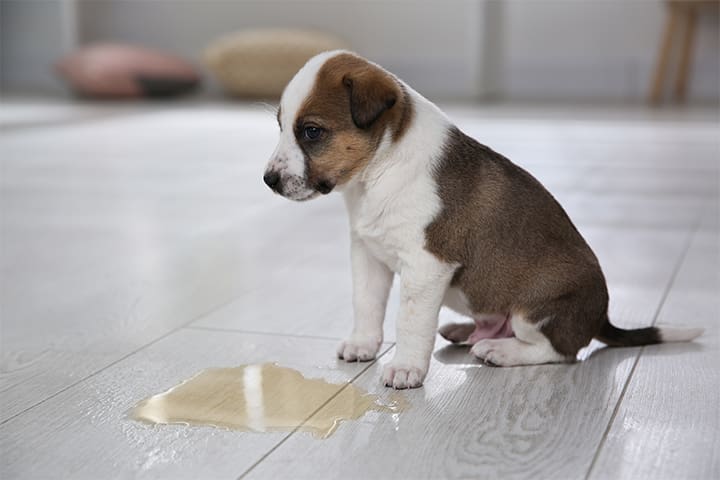
Toilet training a puppy takes patience, a lot of it. Accidents will happen. The trick is to make it as easy as possible for your puppy to get it right.
The basics of toilet training:
Tip: Most puppies can hold their bladder for roughly one hour per month of age. So a two-month-old puppy needs a break every two hours at most. At night, expect at least one or two toilet trips in the early weeks.
A crate might look like a cage, but when introduced properly, most puppies come to love it as their own personal den — somewhere quiet and safe they can retreat to.
Crate training also makes toilet training much easier. Puppies instinctively avoid soiling their sleeping area, so a correctly sized crate (big enough to stand up and turn around in, but not much bigger) encourages them to hold on until you take them outside.
How to introduce the crate:
Never use the crate as punishment. It should always be a positive, safe space.
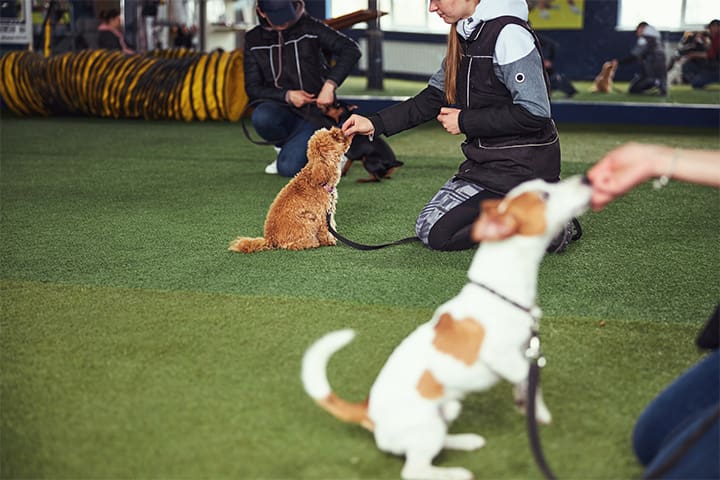
If you can, enrol your puppy in a puppy preschool or obedience class. These are usually run for puppies aged 8–16 weeks and offer two big benefits:
Ask your vet or local council for recommendations. Look for trainers who use positive reinforcement methods and are accredited by a recognised Australian body such as the Delta Institute or the Pet Professional Guild Australia.
Training is all about building good habits early, and so is getting enough sleep. If your puppy is struggling to settle at night, week 4 of our series is exactly what you need. We’ve got practical tips to help your whole household get a bit more rest.
Learn more about puppy insuranceJump to any chapter:
Week 1: First-time pet parent guide
Week 2: Puppy vaccinations
Week 3: Preparing for training (you are here)
Week 4: Puppy sleep troubles
Week 5: Nutrition and growth
Week 6: Behavioural challenges
Week 7: Socialisation checklist