
Why is your rabbit’s gut health so important?
Small changes in your rabbit’s appetite or droppings can signal gut problems. Learn what to watch for.
Read more22 October 2026
Your budgie might be chatting to its reflection or your cockatiel whistling from its favourite perch. Behind those familiar sounds is a breathing system that works very differently from your own.
Jump to section:
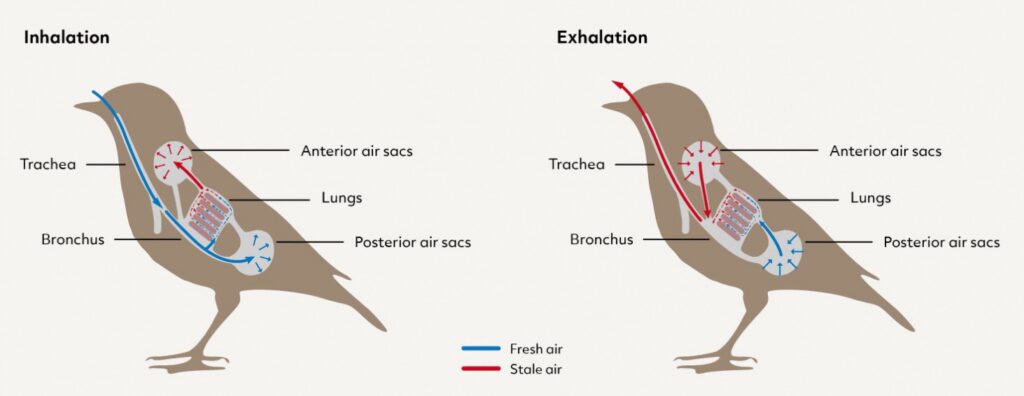
Like us, birds have lungs, but theirs stay relatively fixed in size as they breathe. Most birds have nine air sacs that work like bellows, expanding and contracting to move air through the lungs, where oxygen passes into the bloodstream.
Here’s the fascinating part: air flows in the same direction through the lungs’ main gas-exchanging passages as your bird breathes both in and out.
That’s a remarkable amount of activity inside the little companion sitting on your shoulder.
When you’re caring for a bird, it’s natural to focus on food, fresh water, toys and a comfortable enclosure. The air around them deserves just as much attention.
Birds are highly sensitive to airborne pollutants. Cigarette smoke, aerosol sprays, perfumes, scented candles, incense and fumes from cleaning or painting can put their health at risk. Something that barely bothers you may still be harmful to your bird.
The kitchen is a particular concern. Some non-stick cookware contains a coating called PTFE, which can release highly toxic fumes when overheated. These fumes can be fatal to birds, and they can travel beyond the kitchen into other parts of the home.
Keep your bird’s living area away from cooking and household fumes, with suitable ventilation. Opening a window or using an exhaust fan should never be treated as enough to make a hazardous product safe around your bird.
You don’t need to understand every detail of bird anatomy to notice when your companion seems different. Spending time with them helps you learn what’s normal: how much they chatter, how active they are and how they breathe when resting.
Changes such as wheezing, discharge around the nostrils, open-mouth breathing or a pronounced up-and-down tail movement with each breath need veterinary attention. An unusually quiet bird or one that seems ruffled and reluctant to perch may also be unwell. If your bird is struggling to breathe, contact an avian vet or emergency veterinary clinic immediately.
Protecting your bird means thinking about both their daily surroundings and the care they might need unexpectedly. Having an avian vet’s contact details handy is a useful place to start. Planning for veterinary bills is another.
Petcover Australia offers bird insurance from $21 a month* to help with eligible veterinary costs if your bird becomes ill or injured. Petcover is Australia’s only specialist exotic pet insurance provider, offering cover for birds, reptiles, turtles and small mammals.
Whether your companion is a chatty budgie or a cockatoo with plenty to say, their health deserves care and attention.
Find out more about Petcover’s bird insurance.
T&Cs apply. Acceptance criteria, limits, exclusions, excesses and waiting periods apply. Read the Product Disclosure Statement and Target Market Determination before deciding whether the cover suits your needs.
Protect your bird today